


HOME|SOLUTIONS|ARGOS SYSTEM|GROUP EXPERTISE|ABOUT US
HOME arrow ARGOS SYSTEM arrow FAQ
Faq

Argos location FAQ


GENERAL QUESTIONS

How can I locate my platform with Argos?

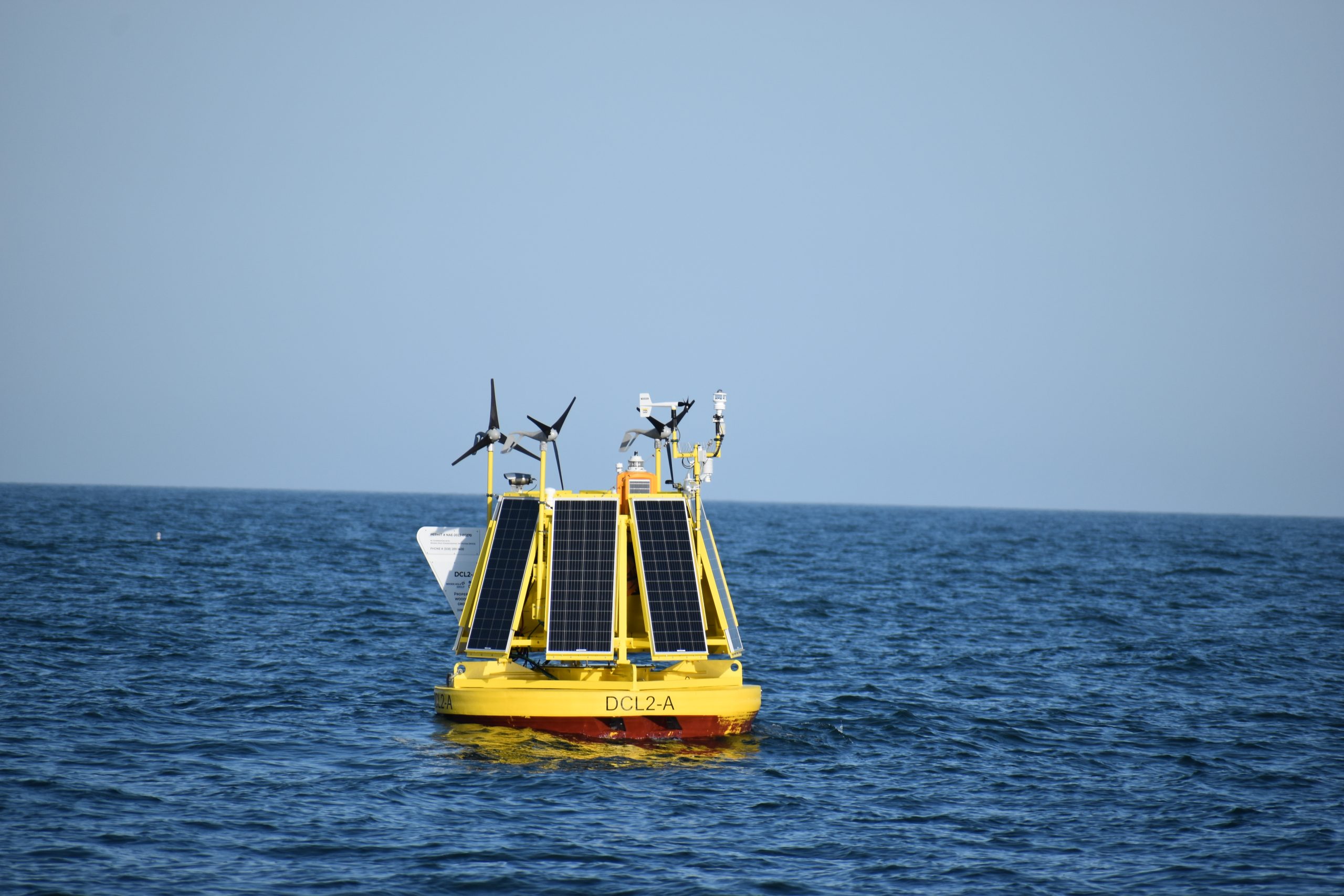
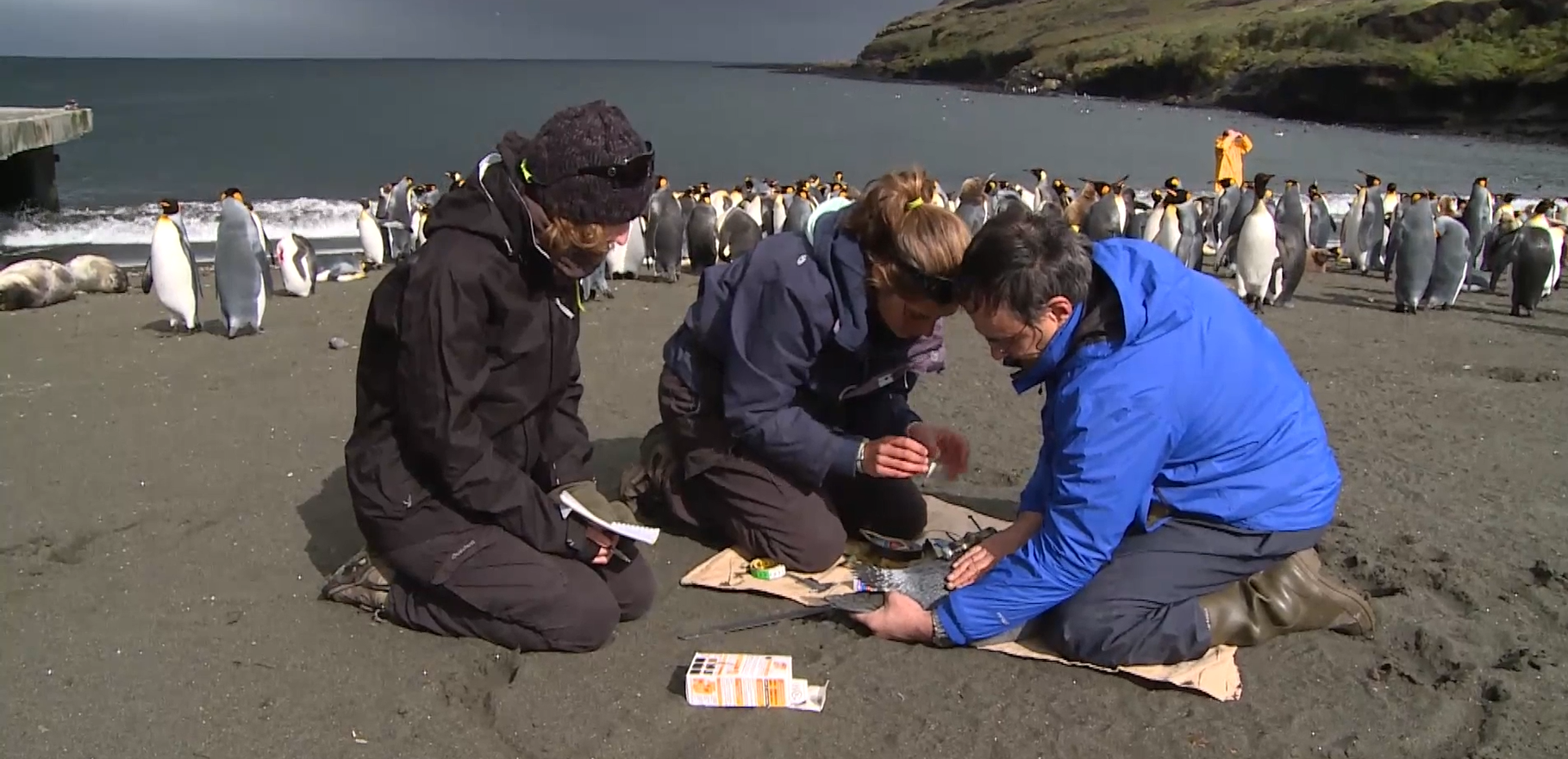
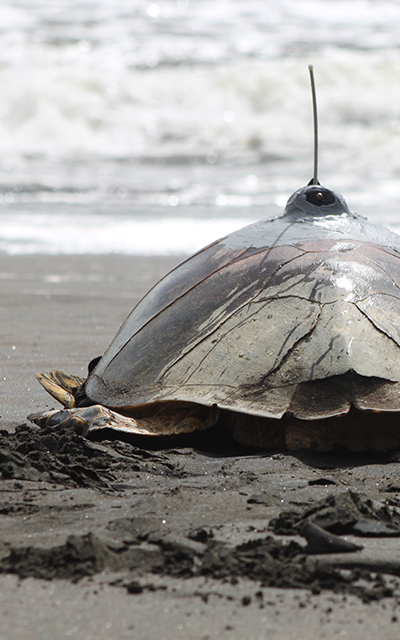
Argos can track platforms anywhere in the world, supplying positions to users around the globe. Platforms can be attached to practically any type of physical object, for example: an ocean buoy, a truck, a bear, a bird, or a sailboat. Argos platforms are located by using the Doppler effect which gives an accuracy of up to 150 meters.

- Doppler locations are good for compact, low-power transmitters and in difficult radio environments. The satellites receive the signals sent even in extreme conditions such as a platform transmitting from a dense rainforest or from transmitters attached to stacked containers.

- As an option GPS can be added to an Argos platform. Applications that require more accuracy can use GPS fixes in addition to Doppler locations. GPS allows an accuracy better than 100 meters and can provide regular positions.

How does Argos Doppler-derived location work?

Each time a satellite passes over a platform it collects messages transmitted by your platform and accurately measures the frequency of the received signals. Messages and measured frequencies are relayed to the Argos processing centers via ground stations. The centers then calculate the location of the platform for this given pass, accurate to within 150 meters.
Argos locations are calculated by computing the Doppler shift on the transmitter signals. This is the change in frequency of a sound wave or electromagnetic wave when a transmitter and a receiver are in motion relative to each other. The classic case is the change in the sound you notice when a train approaches and moves away. Similarly, when the satellite "approaches" a transmitter, the frequency of the signal measured by the satellite receiver is higher than the actual transmit frequency, and lower when it moves away.

How can I use a GPS receiver with Argos?

You can interface a GPS receiver to your Argos platform. GPS fixes collected by this receiver at pre-set intervals will be coded in Argos messages and relayed to the Argos processing centers. Several fixes can be stored in a single 256-bit Argos message, the total number depends on the coding and the required accuracy (up to few meters for full GPS accuracy).
When predefined formats are used GPS fixes are validated and formatted as the other Doppler locations;
Argos Doppler derived location can still be used as a back-up in case GPS signals cannot be received by the platform.

When should I go for GPS?

Using GPS in addition to Doppler locations is useful if:
- you need locations at regular intervals, for example 24 times a day, calculated on the hour (Doppler locations are usually spaced irregularly through the day)
- you need extra or frequent locations
- you need 100-meter location accuracy or better (average Doppler location accuracy is 350 meters)
- the satellites receive only a few of your messages during each pass, for example because your platform is in an unfavorable position such as a deep valley.
Most Argos manufacturers provide transmitters integrated with GPS receivers.

What should I do if my platform transmits only 2 or 3 messages per satellite pass?

Apply to Location Service Plus (ALP) service which will provide you with locations calculated with 3 or 2 messages (respectively class A or B).

Do I need the location service plus (ALP) service?

If your platform is transmitting in difficult conditions and if only a few messages are collected at each satellite pass, the answer is yes. You will get more locations.


LOCATION PROCESSING (DOPPLER_DERIVED)

How does the location calculation work?

   Calculation diagram (click to enlarge)

4 steps:

- Step 1: Location first guess using a geometrical calculation based on first and last messages of the pass: two possible locations are obtained on each side of the satellite track as the result of the intersection of two cones and the platform altitude ellipsoid.

      cone diagram (click to enlarge)

- Step 2 (if 4 or more messages are collected): location calculation using a least-squares method to reduce the distance between recorded frequencies and theoretical (expected) frequencies as a function of longitude, latitude and actual frequency of the transmitter. Note that the altitude of the platform is assumed to be known.

- This calculation either converges or does not converge.
If the calculation does converge, then a latitude, a longitude, a transmit frequency and a residual error of least-squares calculation are produced. The residual error will be used to estimate the location accuracy.
If it does not converge, the class applied is Class Z which is classified as an invalid location.

This calculation is done twice, each with one of the two first guess locations thus providing two location candidates (the actual one and the so-called mirror location).

- Step 3: tentative choice of the best solution using the results of the current calculation (the best solution should have the minimum residual error) and information on previous location,

- Step 4: validation of the selected solution: up to 4 plausibility tests are applied and the solution is accepted if at least two are matched.

- Step 5: accuracy estimation using the root mean square error and pass geometrical parameters (HDOP). Only if 4 or more messages were collected.

Why would I get a wrong location?

In very few cases the " mirror " location (the other candidate location) is selected by the automatic processing. See explanation in FAQ above. Note that the risk is considerably less than 1%.

I don't have any location for a given satellite pass, why?

- The location class calculated is lower than the class you require - If you don't ask for them, you usually don't receive class 0 locations, as their accuracy doesn't suit many applications - , or
- Number of messages received is less than 4 (and you haven't subscribed to the Loc plus/ALP service), or
- Number of messages is less than 2, or
- The location process failed (class Z), or
- Your platform has been located but the processing was unable to decide automatically which of the two locations (the mirror or the actual one) was the good one, see plausibility tests, or
- The location process is being re-initialised (because either it's the first time your platform is being located or the previous location is too old or a frequency jump was observed). A second satellite pass and location are needed to confirm the location; to go faster you can initiate the process by inputting manually a first approximate location and/or the transmit frequency with the MOD command.

What are the plausibility tests, and how are they used?

There are four plausibility tests and they are used to validate the location of your platform - see question above " How does the location calculation work  " step 1 to 3. The location is validated if two or more plausibility tests are matched.

The plausibility tests are performed " against " the other location candidate:

- P1: the residual error of the location is significantly smaller (than the one of the other location candidate)

- P2: the transmit frequency is closer to the transmit frequency calculated at the previous location (that is, closer than the one of the other location candidate) (frequency continuity)

- P3: the distance between the new location and the previous one is smaller (minimum displacement) (than the one of the other location candidate)

- P4: the platform speed inferred from new and previous locations is below the maximum speed indicated for this platform.

IF no location was validated, for a given pass, does it mean both location candidates are bad?

No, because in some cases we cannot apply all plausibility tests and only two or less tests are left for the matching:
- For class A, B locations, we have no residual error value, so this test cannot be applied.
- The frequency continuity test is not applied if the dates of new and previous locations are more than 12 hour apart, as the transmit frequency may experience large drifts over longer periods.
- The speed test does not make sense if the new and previous location are separated by a long period of time (the threshold is two days for drifters, floats, birds and land animals, and 4 days for marine animals)

As an example, a class A,B location just after a long transmit switch-off period cannot be validated at the first satellite pass because just one test is left: the minimum displacement from previous location.

How does it work when only 2, or 3 messages are collected?

- 2 messages will provide, if calculation is successful, a class B location. The location is the first guess obtained from the geometric calculation (see FAQ "How does the location calculation works ", step 1). The transmit frequency used is the previous transmit frequency computed for the previous successful location (with at least 3 messages). This explains why, when this previous location is old, the quality of the location is usually poor.

- 3 messages will provide, if the calculation is successful, a class A location. The 3 message processing method is similar to the 4 and more message method but there are not enough messages to compute the residual error (3 equations can only resolve 3 unknowns, latitude, longitude and frequency).

How many messages are needed to process Doppler curve?

4 or more messages are needed. Messages need to be well distributed along the satellite pass in order to enable proper determination of the Doppler-curve, and in particular of the inflection point which corresponds to the actual transmit frequency. (a diagram will help)

What's the impact of the maximum speed of my platform, which value should I give?

- The maximum speed is used to validate the locations (see plausibility tests in FAQ above). Note that this test is given special weight as it is the only one clearly related to the nature of the platform. When both tests (max. speed and minimum distance from previous location) fail, the validation fails and location is given class Z.
- It is in your interest to provide a realistic maximum speed of your platform.
If the maximum speed is underestimated, this will not discard the locations but may reduce their number. As an example, you will want to still receive some locations from your drifter when it is on its way for deployment on the ship deck.
Overestimation of the maximum speed will reduce or cancel the interest of this test thus increasing the chances of releasing wrong locations.

Note: the speed test will fail only if your platform moves in a straight line at a speed higher than the indicated maximum speed between the two satellite passes being considered.

What is the impact of the topography?

The clear impact is that fewer messages are collected as a result of screening by mountains, cliffs or other obstacles.
As a result, you will get more class A & B locations when 2 or 3 messages are collected and poor, or no locations at all with more messages just because they are concentrated on one side of the pass (Doppler curve cannot be assessed).
If the platform is moving up and down through different altitudes this will also impact the location accuracy as calculations are done assuming the platform is at a pre-defined fixed altitude.


LOCATION ACCURACY

What's the meaning of location classes?

Location classes provide information on the location process and an indication of the location accuracy:

- classes 0,1,2, 3 indicate the location was obtained with 4 messages or more and provides the accuracy estimation,
- class A indicates that the location was obtained with 3 messages,
- class B indicates that location was obtained with 2 messages,
- class G indicates the location is a GPS fix obtained by a GPS receiver attached to the platform. The accuracy is better than 100 meters.
- class Z indicates that the location process failed.

The accuracy cannot be estimated for classes A & B (not enough messages)

What is the accuracy of Doppler locations?

Location accuracy varies with the geometrical conditions of the satellite passes, the stability of the transmitter oscillator, the number of messages collected and their distribution in the pass. This means in particular that a given transmitter can have locations distributed over several classes during its lifetime.
Classes for which accuracy is estimated and related values:
- Class 3: better than 150 m on both axes, 250 m radius
- Class 2: better than 350 m, 500 m radius,
- Class 1: better than 1000 m, 1500 m radius
- Class 0: over 1000 m, 1500 m radius
These are estimations at one sigma.

How accurate is the error estimation?

Our experiments with different sets of transmitters at fixed positions or moving slowly have shown proper matching with the error estimations.
Yet, in a few cases users have reported significant discrepancies.
The error estimation process is not totally independent of the transmitter frequency stability, or of the platform motion which also translates into a frequency shift. It assumes that the frequency is " approximately " stable during the satellite pass. As a consequence, oscillator instability or a fast moving platform may lead to underestimation of the error.

How accurate are class 0 locations?

Error estimation of class 0 location is higher than 1.5 km. The error estimate (radius) for a Class 0 location is greater than 1500m and there is no upper limit - the error could be 50, 100, 500 km.
Practically, there are two categories of class 0 locations:
- Locations with errors less than say 10 km (usually the platform is close to the satellite ground track or random frequency instabilities are observed between messages),
- Very inaccurate locations, with errors above 50 km, which correspond to out-of-range instabilities from the oscillator.

By knowing the error radius one will be able to separate these two categories and enjoy class 0 of moderate quality. We plan to provide this radius with our new Argos 2001 interface.

How accurate are class A & B locations (empirical data on class A & B)?

Class A & B location may be accurate. We cannot specify the accuracy since more messages are needed to estimate the error. We can just say that class A locations are usually more accurate than class B because the transmit frequency has been computed thus enhancing the process. Some users have experimentally tried to answer this question and provided interesting hints. We are confident that approaches of this type will help provide interesting guidelines to enhance practical use of this type of locations.

What is the impact of platform altitude?

The location calculation assumes that the platform is at a fixed pre-defined altitude. An error on platform altitude translates into an error varying between half and four times this error on longitude.
Note: you can update the altitude value of your platform using the MOD command.

What is the impact of platform motion?

Platform motion reduces the accuracy of Doppler locations.
Platform motion, seen from the processing point of view, looks like frequency drift. The motion introduces an additional Doppler shift which is included in the frequency signal measured by the satellite. It tends to distort the ideal Doppler curve which would be obtained from a fixed platform with a stable oscillator. As a consequence, the residual error is larger and the accuracy is lower.

What is the impact of TX transmitter frequency drift?

Short term instabilities in the transmitter oscillator distort the Doppler curve. The location calculation is rather robust to random instabilities but is sensitive to frequency drift which produces the same effect as platform motion. As a consequence, location accuracy will be reduced and in the case of a highly unstable oscillator there will be no location at all.

Do we take speed into consideration in the processing?

When the previous location is not older than 12 hours, the speed of the mobile is estimated using the candidate location and the previous one. The location calculation is done again taking into account the estimated speed of the platform and if results are improved the new location result is kept.
Whenever appropriate, the software attempts to improve the solution by considering that the mobile has moved at a uniform speed since the previous location.
This attempt is performed when the max speed test is matched and, to ensure the validity of the mean speed hypothesis, when the time interval between the two locations is between 0.5 and 3.5 hours

Does accuracy increase with the number of messages received?

Generally yes, but not always:
- Transmitters and antennas should be tuned to enable the collection of 4 or more messages at each satellite pass so that accuracy estimation can be provided,
- 3 message locations are generally more accurate than 2 message ones,
- More messages poorly distributed along the pass - i.e. on the same side of the Doppler curve, will not help,
- Getting more than say 6 messages well distributed in a satellite pass has no significant impact. Oscillator stability is then the key parameter.


ACCESSING LOCATION RESULTS

I don't get any locations with my COM & PRV commands, do I have any?

COM and PRV commands provide you with the validated locations (see Plausibility test FAQ above). You can always find the two location candidates resulting from the location calculation by using PRV/C or DIAG command, unless the calculation failed (class Z). Best candidate is shown in the first position.
Note: to access these commands, you need to subscribe to the Location Service Plus (ALP) service.


DIAGNOSTIC TOOLS

Users can obtain further information on location process and transmitter performance by consulting DIAG command. This command is supplied through the Location Plus/ALP service option. CLS/SAI have developed "in house" tools to provide some additional expert explanations on the ARGOS location calculation process. These tools may be used upon request in some dedicated cases.


ENHANCING PERFORMANCE, SOURCES OF ERROR

How can I get more locations from my platform now?

- If you haven't done so, subscribe to the multisatellite service, which will provide you with additional locations resulting from the complete Argos constellation,
- Ask your user office to provide you with class 0 locations, you will get locations computed with 4 messages or more with an accuracy less than 1000 m,
- Subscribe to the Location Service Plus (ALP), if you haven't done so yet. You will get additional locations computed with 2 or 3 messages.

How can I get more locations for my future applications?

- If power and size constraints allow, use an Argos+GPS platform,
- Increase the number of messages collected and hence the locations by working with your manufacturer and us to define proper transmitter power and frequency channel allocation. Note that there are three dedicated channels for low-power transmitters. In these channels low-power signals don't compete with high power signals so more messages can be collected,
- If your platform does not transmit permanently, work with your manufacturer and us to adjust the transmitter duty cycle; some locations may be lost just because the silent mode is too long and transmission time too short.

How can I improve the accuracy of my locations?

- If power and size constraints allow, use an Argos+GPS platform, this is particularly interesting if your platform travels at high speed
- If enough messages are collected (4 or more), the key issue is the oscillator stability. Select the most stable transmitter for your application,
- If you are getting a lot of class A & B locations, your first target will be to increase the number of messages collected by the satellite to get more 0,1,2,3 classes. Work with your manufacturer and us to tune the transmitter power, frequency allocation and duty cycle.
In parallel, try to go for stable transmitters to enhance your chances to get class 3 and 2 locations. Note that stability is harder to achieve on miniaturized transmitters.

Will I get better results just by increasing rep rate?

Increasing the repetition rate should increase the number of messages collected thus giving you better chances to get more locations and better accuracy. Yet, this has an impact on power consumption and is not always appropriate (see FAQ above and also "Does accuracy increase with the number of messages received "). You should consider in your approach all the parameters such as transmit power, duty cycle and especially the frequency allocation, all of which have a very significant impact on the overall performance.

 
Home | Sitemap | Publishing information | Online payment
  Friday, 05 September 2008